Here is the CMT Uptime check phrase Skip to main content

How to determine the best NIA postdoc-to-faculty transition award opportunity

Jamie Lahvic, Program Officer (Training), Office of Strategic Extramural Programs NIA offers several different career development (K) awards for postdocs looking to transition to a faculty position: the K99, K22, and K01. But many researchers aren’t aware of all of these options or aren’t sure which award is the best fit. To help, we’ve developed […]

National Institute on Aging

Jamie Lahvic, Program Officer (Training), Office of Strategic Extramural Programs

NIA offers several different career development (K) awards for postdocs looking to transition to a faculty position: the K99, K22, and K01. But many researchers aren’t aware of all of these options or aren’t sure which award is the best fit.

To help, we’ve developed a new webpage highlighting our career transition awards and provided some example profiles of postdocs who are good matches for each. The next due date for all three award applications is Feb. 12, 2024, so now is a great time to get your submissions ready. Read the full blog post on the NIA website.

Center for Global Health EquityThe Center for Global Health Equity published Population Health and Aging in Rapidly Changing Contexts, a profile of Amy Pienta.

Dr. Amy Pienta’s global work focuses on the demography of aging and retirement and health in later life, including a large research project that focuses on building data infrastructure to study populations of people living with HIV throughout the world. Pienta’s primary research interests are retirement and health in later life. She has studied women’s retirement behavior, labor force exits of African-American and white men, the joint retirement behavior of married couples, and the relationship between various social statuses and health.

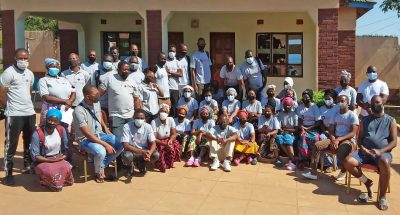
Group of people wearing masks outside a building in Malawi

The field research team of the Malawi Longitudinal Study of Families and Health

At the beginning of the COVID-19 pandemic, it was widely predicted that sub-Saharan African populations would be the hardest hit by the virus for various reasons including limited medical infrastructure, overcrowded living conditions, high prevalence of other infectious diseases, and manual labor-based economies which preclude easy social distancing.

But as the first wave of the pandemic peaked in 2020, news stories and scientific journal articles were reporting the apparent low rates of COVID-19 transmission and mortality in Africa. Iliana & Hans-Peter Kohler from the Penn Population Aging Research Center led a team to understand why.

Read the news article, which describes the effort to get the survey in the field as quickly as possible, in Penn Today and the research paper, Curtailing Covid-19 on a dollar-a-day in Malawi: Role of community leadership for shaping public health and economic responses to the pandemic, in World Development.

The research led by Associate Professor Tetyana Shippee includes documenting trends in the services used or desired by clients and the factors related to how satisfied they are with their care.

The population of people age 65 and older in the United States is quickly growing with increasing numbers of them needing long-term services and supports (LTSS). LTSS involve a variety of services designed to meet a person’s health or personal care needs to help them live as independently and safely as possible when they can no longer perform everyday activities on their own. Most older adults who need LTSS prefer to remain at home rather than receive care in nursing homes. Those living at home can use a number of LTSS services, including home health care, hospice services, meal delivery, housekeeping and other assistance, known as home and community-based services (HCBS). The University of Minnesota School of Public Health (SPH) is launching a new project to understand the scope of HCBS services used and desired across the United States. The project will also determine client and state-level factors that influence satisfaction with HCBS care and how it varies for people with diagnosed with dementia.

Associate Professor Tetyana Shippee is the principal investigator of the study and has teamed up with Assistant Professor Eric Jutkowitz (PhD ‘17) from Brown University as a co-principal investigator. Shippee is a national expert on promoting quality of life for older adults and leads numerous studies on measuring and improving quality of life and well-being among older adults receiving LTSS.

The study is funded by a four-year grant from the National Institute on Aging providing more than $2 million. Read the full article

Some health experts believe that such impacts might even leave certain people more susceptible to infection by the coronavirus.

Older women in the United States continue to live longer than men, on average, but they’re spending an increasing share of their later years living with a disability, research suggests.

The Population Reference Bureau: The United States doesn’t have the world’s oldest population, but relatively high levels of age-related disease could affect the proportion of Americans who become critically ill because of COVID-19.

Sarah A. Tishkoff (U Penn) et al. argue for the need to have more diverse populations in studies of genetic association with disease. Most studies of this type have focused on Europeans, they said, adding that “this European bias has important implications for risk prediction of diseases across global populations.”

Lisa Berkman (Harvard) examines ties between an individual’s social connections and their health and longevity, noting comparisons of social social isolation and other major mortality risk factors, like smoking. Also, eating together with people in your social circles can have its benefits, said Berkman.

Brian E. McGarry, Nicole Maestas, and David C. Grabowski concluded, in an article published in the journal Health Affairs, found that inefficiencies in an internet-based Medicare tool called “The Plan Finder” used by the Centers for Medicare and Medicaid Services (CMS) to help beneficiaries identify a preferred plan, may be resulting in consumers not choosing the lowest cost plans that fit their needs.