Here is the CMT Uptime check phrase Skip to main content

7 Trends Reshaping the Health and Lifespans of America’s Rapidly Aging Population

Experts point to key dynamics challenging policymakers, health care planners, and families Early onset chronic disease, a growing caregiving gap, and climate change are among the major trends affecting the health and well-being of older Americans and their families, according to leading scholars from across the country. Before a standing-room-only crowd at the 2025 meeting of […]

Experts point to key dynamics challenging policymakers, health care planners, and families

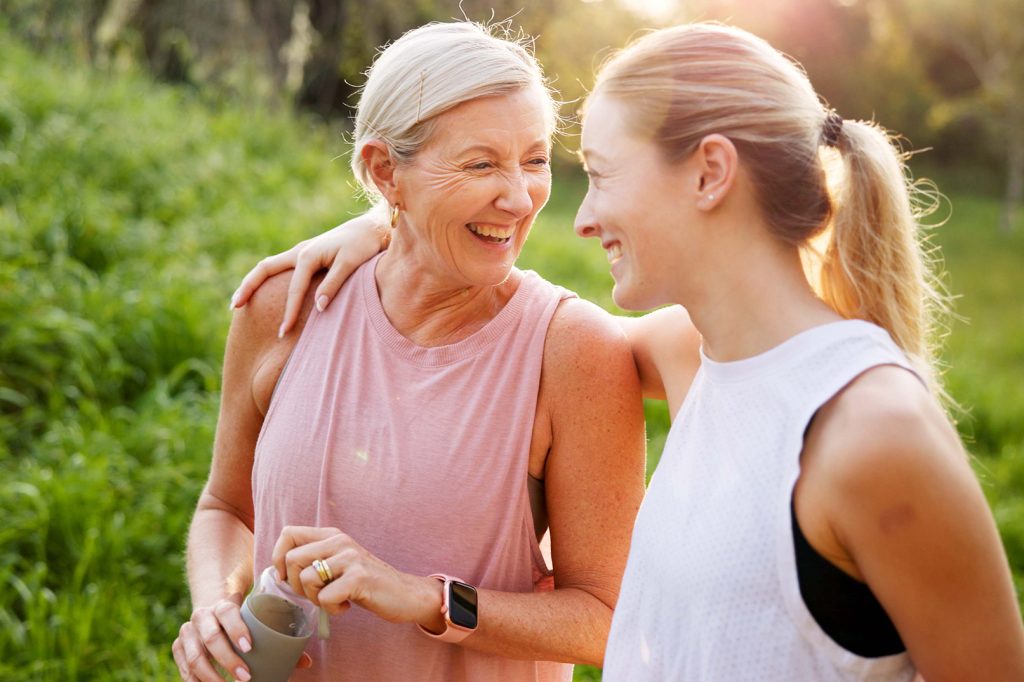
Mature woman, daughter and outdoor on walk for fitness, wellness and exercise in nature with laughing.

Early onset chronic disease, a growing caregiving gap, and climate change are among the major trends affecting the health and well-being of older Americans and their families, according to leading scholars from across the country.

Before a standing-room-only crowd at the 2025 meeting of the Population Association of America in Washington, D.C., experts identified seven key themes that are challenging policymakers, planners, and families as the U.S. population rapidly ages.


Paola Scommegna and Mark Mather (August 2025). 7 Trends Reshaping the Health and Lifespans of America’s Rapidly Aging Population. Population Reference Bureau.

In an aging country, understanding fall risk and supporting caregivers with evidence-based strategies to mitigate it are increasingly urgent.

Senior woman climbing staircase with difficulty.

Falls are the leading cause of injury for older Americans, with more than one in four adults ages 65 and older falling each year. For those with dementia, the risk of falling—and of serious consequences like fractures, hospitalizations, and decline, and placement in a nursing home—is even higher.

New research funded by the National Institute on Aging explores the relationship between dementia and falls among older adults who live in communities, as opposed to in institutionalized settings like nursing homes or assisted living facilities. Experts call for tailored strategies like better caregiver education and coordination between caregivers and health care providers to prevent falls among this vulnerable population.

The U.S. population is aging rapidly, and the number of dementia cases continues to rise. More Americans are also opting to age in place—or live at home as long as possible. In this context, understanding fall risk and supporting caregivers with evidence-based strategies to mitigate it are increasingly urgent, research suggests.


Income, neighborhood characteristics, and state policies may underly racial disparities in who gets needed care, despite federal efforts to expand home-care programs.

Although the Affordable Care Act (ACA) included provisions to expand community and home-based services for older adults, research shows that Black and Hispanic older adults are much more likely to need daily help at home—and to go without it—than their white peers.

About 1 in 3 Black and Hispanic older adults had difficulties at home with daily tasks such as showering, dressing, or preparing hot meals compared with 1 in 5 older white adults, finds a new study by Jun Li of Syracuse University and Jinkyung Ha and Geoffrey Hoffman of the University of Michigan. The researchers used data from 2008 to 2018 from the nationally representative Health and Retirement Study.

Black and Hispanic older adults ages 55 and above who need help with daily activities were consistently 1.5 times more likely to be without corresponding care support than older white adults, Li, Ha, and Hoffman found. Yet they were no more likely than older white adults to receive paid help, instead relying heavily on family and friends.


Paola Scommegna & Mark Mather (March 2024). Among Older Americans, Black and Hispanic People Are Much More Likely to Need Help at Home—and Go Without It, Population Reference Bureau.

Jun Li, Jinkyung Ha, Geoffrey Hoffman (2023). Unaddressed functional difficulty and care support among White, Black, and Hispanic older adults in the last decade. Health Affairs Scholar, 1(3).

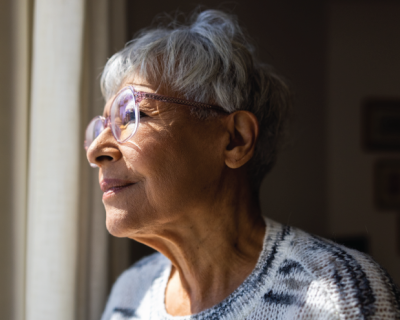
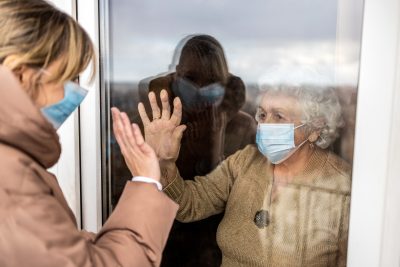
Elderly woman looking out a windowDuring the first year of the COVID-19 pandemic, older Americans with dementia faced a dramatically higher risk of infection and death than older Americans without dementia, not only in nursing homes, but also in assisted living facilities and the wider community, recent studies show.

People living with dementia are vulnerable to COVID-19 infection because they tend to have underlying health conditions and rely on caregivers, and they may be less able to follow risk reduction measures such as masking, said Johanna Thunell of the University of Southern California.

“Persons living with dementia are at higher risk of hypertension, diabetes, stroke, COPD, and chronic kidney disease, conditions that we know increase their risk of being hospitalized or dying of COVID-19.

“Many of those living in a community setting rely on family and friends for help with everything from paying bills to bathing and eating. This reliance on care partners likely precluded many from isolating within their household or family unit, increasing their exposure to COVID-19.”

Thunell is among several researchers supported by the National Institute on Aging who are examining the experiences of people living with dementia during the first years of the pandemic to improve care in future health emergencies.


Paola Scommegna, Mark Mather (February 2024). No Matter Where They Lived, Older Americans With Dementia Were More Likely to Die From COVID-19, Population Reference Bureau.

Johanna A. Thunell et al. (2023). COVID-19 Hospitalization and Mortality in Community-Dwelling Racially and Ethnically Diverse Persons Living With Dementia. Journal of the American Geriatrics Society, 71(5): 1429-39.

New research shows the pandemic deepened feelings of loneliness, anxiety, and depression for many older adults and their caregivers. Social connection is the “medicine hiding in plain sight.”

Issue 43 of Today’s Research on Aging, Safer but Alone: How COVID-19 Protections Affected Older Adults’ Mental Health, was written by Mark Mather and Paola Scommegna of the Population Reference Bureau (PRB).

During the early weeks of the COVID-19 pandemic, it became clear that older Americans faced a higher risk of serious illness and death from infection. As COVID-19 spread rapidly across the country, public health officials focused on containing the virus through unprecedented restrictions on travel and social gatherings. Many older adults were isolated from their families, friends, and caregivers to protect them from the disease.

But protecting older adults’ physical health came at a cost. Researchers have linked prolonged social isolation and loneliness to serious physical and mental health issues, including high blood pressure, heart disease, obesity, a weakened immune system, anxiety, depression, cognitive decline, Alzheimer’s disease, and even death.1

Four years after the pandemic’s onset, new research is starting to uncover the effects of social isolation on the mental health of older Americans. This report summarizes key findings by researchers who, with the support of the National Institute on Aging (NIA), studied the impact of the pandemic on the mental health of older adults and their caregivers. The results can help health officials make informed decisions in the event of another public health emergency—and deliver better care to the millions of older adults dealing with lingering mental health issues from the pandemic.

Kai Zhang coauthored a new study on “Social Drivers of Mental Health: A U.S. Study Using Machine Learning.” American Journal of Preventive Medicine 2023, 65(5):827-834.

Tiago Barreira coauthored a new study, “Cadence (steps/min) and relative intensity in 61 to 85-year-olds: the CADENCE-Adults study.” International Journal of Behavioral Nutrition and Physical Activity 20:141 (2023).

Scott Landes, Bonnielin K Swenor, & Nastassia Vaitsiakhovich. Counting disability in the National Health Interview Survey and its consequence: Comparing the American Community Survey to the Washington Group disability measures. Disability Health Journal. 2023. Online ahead of print.

Jones, M,. Bhattar, M., Henning, E., and Shannon Monnat. 2023. “Explaining the U.S. rural disadvantage in COVID-19 case and death rates during the Delta-Omicron surge: The role of politics, vaccinations, population health, and social determinants..” Social Science & Medicine335 https://doi.org/10.1016/j.socscimed.2023.116180

Marco Albertini, Noah Lewin-Epstein, Merril Silverstein, Aviad Tur-Sinai. 2023. “Becoming sandwiched in later life: Consequences for individuals’ well-being and variation across welfare regimes.” The Journals of Gerontology: Series B https://doi.org/10.1093/geronb/gbad154

Jun Li. 2023. “Home Health Agencies With High Quality of Patient Care Star Ratings Reduced Short-term Hospitalization Rates and Increased Days Independently at Home.” Medical Care https://doi.org/10.1097/MLR.0000000000001930

Europe is the oldest region in the world, with almost one in five people ages 65 and older. Many European countries are concerned about the implications of this population aging, including a growing demand for old-age support and a shrinking pool of working-age people to provide it. As the urgency of the care-work crunch becomes more apparent, new research funded by the National Institute on Aging reveals that women and people without children take on a disproportionate share of this unpaid care work across the continent.

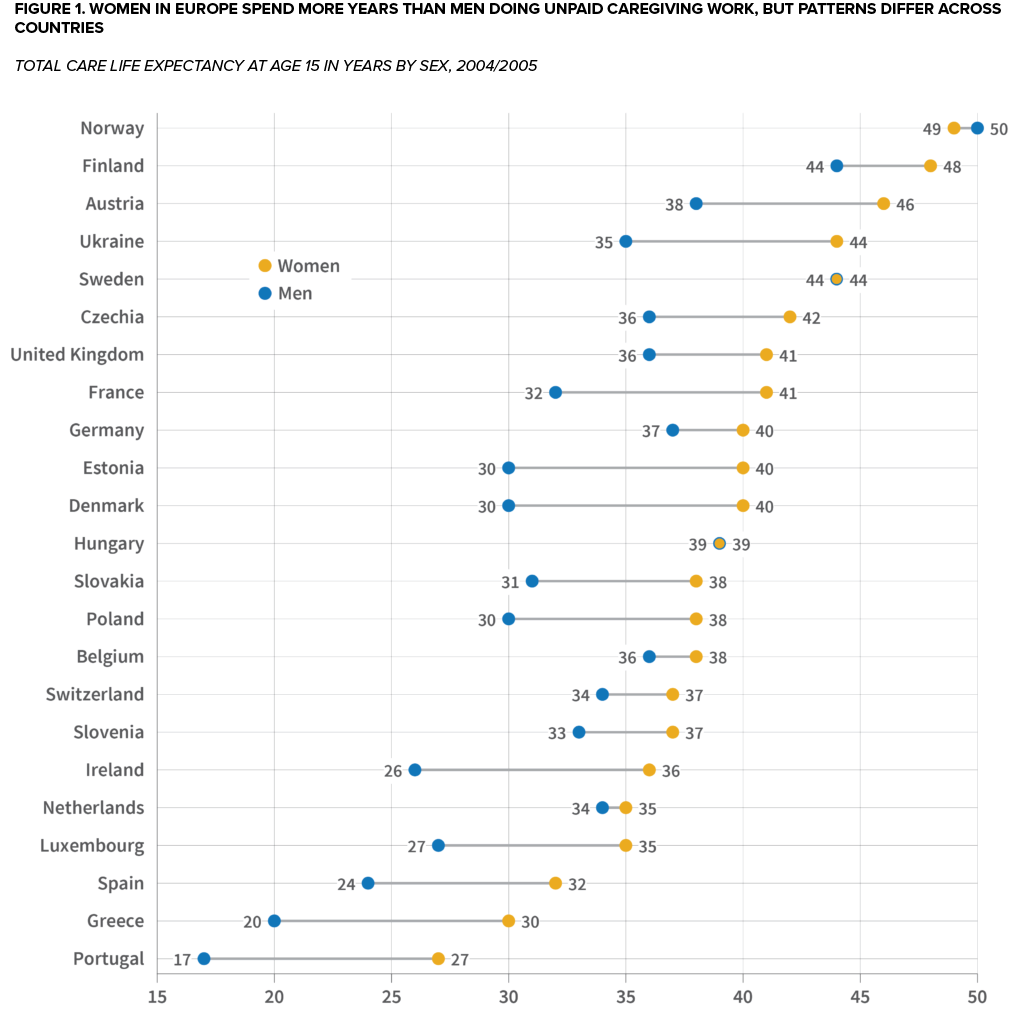
Europeans can expect to spend over half of their lives after age 15 providing unpaid family care work, including taking care of children and older relatives. However, women in Europe spend six more years doing unpaid caregiving work than European men, according to a study by Ariane Ophir, now at the Centre d’Estudis Demogràfics, and Jessica Polos, now at DePaul University.

Ophir and Polos estimated care life expectancy, or the number of years after age 15 people can expect to spend providing informal care, by sex in 23 European countries. Data on unpaid caregiving came from the European Social Survey, and life expectancy data came from the Human Mortality Database’s abridged period life tables.

Total Care Life Expectancy at Age 15 in Years by Sex, 2004/2005

Source: Ariane Ophir and Jessica Polos, “Care Life Expectancy: Gender and Unpaid Work in the Context of Population Aging,” Population Research and Policy Review 41, no. 1 (2022): 197-227


Toshiko Kaneda (September 2023). Off the Clock: Europeans Can Expect to Spend Over Half of Their Lives After Age 15 Providing Unpaid Care Work. Population Reference Bureau.

Center for Aging and Policy StudiesMaria Teresa Brown, Sharon A. Brangman, & Nancy H. Smith. “Early Identification of Cognitive Impairment: Utility of the Mini-Cog in Non-Clinical Settings.” Journal of Applied Gerontology (online ahead of print)

Abstract
While we currently cannot cure Alzheimer’s disease or change the course of the disease, there are advantages to early detection. Routine, evidence based, brief cognitive screens offer destigmatized opportunities for diagnosis and improve the possibility of early identification of cognitive impairment. This community-based participatory research project evaluated the use of the Mini-Cog™ instrument to detect cognitive impairment in vulnerable community-dwelling older adults when administered by trained social services providers. Over 9 months, a case manager screened 69 clients ages 65 to 94 (mean 74.67) who met inclusion criteria for the pilot; 84.1% were female, 53.6% were Black, 26% were living with undetected cognitive impairment. Although participants agreed to Mini-Cog™ screening, two-thirds with Mini-Cog™ scores indicating cognitive impairment refused referrals for further evaluation. Future interventions should reduce stigma by educating the public about dementia and engaging members of racial and cultural communities in outreach.